Learning Outcomes
i. Define organic evolution.
ii. Understand the role of genetic variation in evolutionary change.
iii. Explain natural selection and its relationship with adaptation to the environment.
i. Defining Organic Evolution
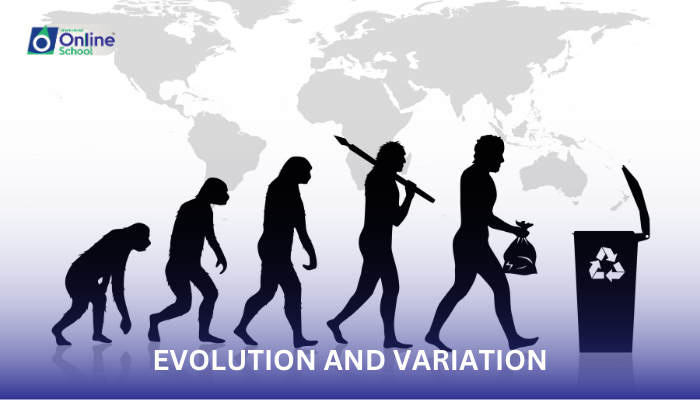
Organic evolution is the process by which changes in the genetic composition of populations of organisms occur over time. These changes can result in the development of new species and the diversity of life forms observed over Earth's history. Evolution is driven by processes that alter the genetic structure of populations, leading to variations in traits that can be passed from generation to generation.
ii. Genetic Variation as a Driver of Evolution
Genetic variation is the raw material for evolution. It is the differences in DNA sequences among individuals in a population that provide the potential for a population to evolve over time. Without genetic variation, all individuals would be genetically identical, and evolution would not occur because there would be no differences for natural selection to act upon.
iii. Natural Selection and Adaptation
Natural selection is the process whereby organisms better adapted to their environment tend to survive and produce more offspring. The theory of its action was first fully expounded by Charles Darwin and is now believed to be the main process that brings about evolution.
Genetic variations that confer an advantage in survival and reproduction can become more common in a population over time. For instance, if a particular genetic variation allows an organism to better extract nutrients from its food, that organism may grow stronger, survive longer, and have more offspring than others in its species. Over many generations, this advantageous trait can spread throughout the population.
Adaptation is the outcome of natural selection, where through the gradual process of small genetic changes selected for over countless generations, a population's characteristics change to make its members better suited to their environment.
iv. Evolutionary Change through Natural Selection
The process of evolution through natural selection involves the following steps:
i. Within a population, there is genetic variation that affects the reproductive success of individuals.
ii. Individuals with advantageous traits are more likely to survive and reproduce. These traits are heritable.
iii. Over time, these advantageous traits become more common in the population.
iv. As environments change, different traits may become advantageous or disadvantageous, leading to further evolutionary change.
In conclusion, organic evolution is a continuous process that is fundamental to the diversity of life. Genetic variation provides the material upon which natural selection acts, allowing populations to adapt to their environments over time, which can eventually lead to the emergence of new species. Understanding the relationship between variation and evolution is key to our understanding of how life on Earth has changed and continues to change.
